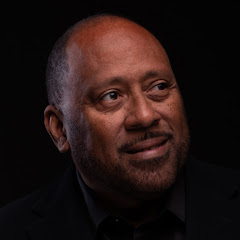
0:06 Welcome to the next edition of the Frankly Speaking podcast. And I wanna remind you, make sure you hit that subscribe button so you don't miss any of our podcast interviews. I'm here with a great friend. We've known each other so long. The one and only Kevin Powell is here.
0:24 Grammy-nominated poet, award-winning journalist, author of 17 books, filmmaker, native son of, uh, Jersey City and, uh, Brooklynite right now. Oh yeah, good to see you, brother, again. How you been, man? I'm honored and happy to be here. I'm happy to be here with Frankly Speaking.
0:42 This is a dope set. Thank you. Say that. Thank you. How you been, man?
0:46 I'm good. I am, um, happily married. Okay, okay. I always tell people this is my second and last marriage ever, you know what I'm saying? Okay, I got it right this time.
0:54 I've been blessed. And, um, just taking in the state of this country, brother, I'm just, you know, um Just traveling around and doing talks and lectures and community conversations, and I'm good. I'm in a good space. Yeah, yeah, yeah. You know, um, we met so long ago, and I'm not sure if it was during your years at Vibe.
1:13 It was, it was, right? Yeah. And you have been— and I just want everybody to know— you have been the culture, um, keeper, the culture person that records everything that has happened in our culture. And when I say culture, I want everybody to understand, primarily at first we met because you were covering a lot of hip-hop. Yes.
1:38 But hip-hop was Black culture. That's right. When you were covering. Yes. And so much so that, you know, you probably are one of the top hip-hop historians today.
1:51 It's a blessing. Um, I actually curated the very first exhibit on the history of hip-hop with the Rock and Roll Hall of Fame 25 years ago, and we We brought it to Brooklyn, to California. And it's interesting, I didn't set out to be a hip-hop journalist at all. Harry Allen, who was with Public Enemy, who's referenced on Don't Believe the Hype song, as you know, he called me one day. He knew I was a freelance journalist.
2:13 I wanted to be a news reporter. I wanted to be an investigative journalist. That's what I wanted to be and write for Black newspapers. That was my ambition. He said, do you write about music?
2:19 I lied and said, yeah, I do, because I needed a check. I was like, am I going to get paid? And that's how it started. That's how it started. That's how it started.
2:26 And, you know, within 2 years, Quincy Jones, late great Quincy Jones, was starting Vibe, and I talked my way into writing a little review for the first issue. And little did I know, they assigned me to do the COVID story as well— what would be cover story on Naughty by Nature, because they were the biggest group in the country at that time, OPP. And they gave me a job. It was a blessing that I cannot even begin to tell you, um, transformed my life, you know what I'm saying? Um, it led to a lot of speaking engagements, book deals, Uh, that's how I met Tupac Shakur, famously because of Vibe.
2:56 All of it. Yeah. Let's back up for a minute. Yes, sir. So your mom was a single mom?
3:01 Yes, yes. You didn't grow up rich by any means? We had nothing. We had nothing, you know. No, no, we struggled.
3:08 Um, you see these overalls I got on? This is a shout out to my family lineage from South Carolina. We are from— we're Lowcountry Gullah Geechee folks. And, uh, my grandfather was a sharecropper. My mother and 2 of her sisters migrated to Jersey City.
3:20 They were afraid of New York. That's why they didn't go to New York. We had cousins in both New York and North Jersey. You know how it is up north, you know what I'm saying? Because you're from New York.
3:26 Yeah. And, um, they were so poor. There was 3 sisters. They shared a bed together in a room when they first got to Jersey City. And they were from such a small town.
3:35 When they got to New Jersey, my mother thought there was an outer space invasion happening because everybody kept saying, the Beatles are coming, the Beatles are coming. They came up north the same week the Beatles came to America. That's her memory of, of coming up north for the migration. Um, my father wasn't there. She raised me.
3:51 My mother has a grade school education, but, Frank, from the time I was 2 or 3 years old, she was teaching me words. And little does she know, she was planting the seeds of me being a writer. When I was 8 years old, I got my first library card with my mother. She got a library card. I'm a big sports fan, like a massive sports fan.
4:05 The first books I read were sports. So when I meet young people today who say they don't like to read, I say, do what I did. Read the things that you love. I love sports— football, baseball, basketball. That's what I would read.
4:13 And eventually it made its way to other stuff— Hemingway, Shakespeare, Edgar Allan Poe. And then when I got to college, all the Black writers, you know, I started to discover. But it was really my mother just telling me the stories of her, of South Carolina, of the South, and the things they went through. And she would share the music with me. So I was, you know, I was— because of her, Marvin Gaye, Aretha Franklin, Sam Cooke, James Brown, Otis Redding, you know, Carla Thomas.
4:38 I mean, I didn't know that those were forming the foundations of me becoming a music journalist one day. Yeah, it was all from my mom. Wow. Yeah, incredible. From such humble beginnings.
4:47 We were poor, brother. Were you a good student in school? Because Mama had a belt and a switch, and yes.
4:57 And think about raising boys is not a game. And so my mother was very clear, I need you to take this seriously. And this is important. We talk about where we are in the country right now and voting. My mother was not a part of the civil rights movement, even though she's a part of the civil rights generation, but she caught the spirit of it.
5:12 I mean, She literally turned 20 on August 28th, 1963, the same day that Dr. King gave the I Have a Dream speech. I would ask my mother, I said, Mom, did you know what was happening? She said, we heard that there were people fighting for our rights. That planted a seed in her that even though she may not have gotten a formal education herself in the way she should have, let me make sure my son gets the education. So I was a straight-A student because moms did not tolerate bad grades.
5:35 She was like, you have to— like, anything less than an A was not good enough. How did you stay away from Obviously back then and where you were, you, you weren't born with money, so you were in a terrible neighborhood. No. How did you stay out of the ruckus? I love school.
5:50 I love school and I love sports. I, I mean, I swore that I was gonna be the second baseman for the New York Yankees. That was my plan. Okay, man, I couldn't see, bro. I couldn't hit the ball to save my life.
6:00 And then when I got to high school, I ran track religiously. So I'm a runner. That's why I've run New York City marathons now and stuff. But You know, back then runners didn't make money the way they did now and stuff like that. But I just— my mother, she— I was a mama's boy, but I, I did get in trouble.
6:14 I got suspended from school because, you know, when you talk about Black boys, a lot of times they don't know how to discipline us or how to— and so I remember in the 4th or 5th grade when I started seeing my friends starting to drop off from school and their grades and stuff like that. It was deep, man. So by the time I got to graduate from the 8th grade and then got to graduate from high school, you know, it was the girls who were excelling because Black boys are targeted. Black and brown boys, you know, are targeted a certain kind of way, unless it's that kind of Yeah, sticking with it. My mother stuck with me.
6:39 I got arrested as a teenager a few times. I got— I was assaulted by the police when I was 15 years old. A lot of stuff happened. And my mother would actually say to me, I don't know if you're going to make it, because the streets was attractive. And yeah, we came of age in the crack era.
6:51 Yeah, absolutely, man. I saw New Jack City everywhere I went, you know. Yep, yep, yep. I was like, you know, I'm going to college on a financial aid package at Rutgers where I went to school, and I'm seeing cats driving big cars and SUVs and had cell phones before anybody else had a cell phone. I was like, how did you do this?
7:08 I mean, it's the same crack, man. I was like, wow. But I also saw the destruction of our communities, you know what I mean? Was going to Rutgers a culture shock? You know, it was funny you asked that question.
7:18 Um, from 13 to 18, we had moved to a majority white neighborhood in Jersey City. Okay. So my introduction to that neighborhood was they called me the N-word the first day I got there. They was— instead of like— I remember I was playing stickball and how we do up north, and, uh, one of the young white boys said, uh, Donnie is me and you, and Joe is you and the GGA. That's what he said.
7:35 I was like That, you know, that was my introduction. I remember chasing the white boy and trying to beat him up for calling me that. And then I also went to, uh, mixed high schools, uh, mixed schools. We had a group in Jersey City called the Bones that stood for Beat on Niggas Every Second. They would come and terrorize us for integrating their schools.
7:52 This is where I grew up. Yeah, man. So it was a trip. So Rutgers, I was already prepared, but living among so many white folks— but what saved my life was Jesse Jackson running for president and anti-apartheid movement, the explosion of hip-hop because it was representing us. Man, I was a big Run-DMC fan, Public Enemy fan, to this day.
8:15 But it was just trying to figure out who I was, and college actually set the tone for everything I've done in my life since. It's where I started writing for real, is where I was very active in serving the community, stuff that I've never stopped doing, honestly. Yeah. How did you get into the first season of The Real World? Everybody's talking about The Real World now.
8:33 Of course, the reboot is on, but how did you get in that first season? Funny story. Remember I said, I said to Harry Allen, I write about music, and that writing about music led me to writing bios for different artists. I wrote the first bio for Usher. I wrote the first bio for TLC.
8:49 Wow. I interviewed, I media coached Kris Kross when they first came out. So I was actually connected to record labels. And I was with a group you may remember called Joe Public that was signed to Columbia Records. Yeah, I remember Joe Public.
9:00 Now, we were all dressed in the way we dressed in early '90s. We went to a restaurant, a 1950s-style restaurant in Midtown Manhattan right by MTV, I would find out. And a white sister came up to us and said, I really like you guys. Look, are you— who are y'all? And they said they were a group, they're Joe Public.
9:13 They— people don't remember, look them up. They did a record that was a hit, Keep Sweat, back in the day. They were musicians from Buffalo, New York. And I took the card. It said casting director.
9:22 Brother, I didn't know what a casting director was. I was like, what's this? But I remember thinking to myself, you know, maybe if I get on TV, I'll get some speaking gigs out of it. I had no idea what it was. And we did a few interviews.
9:32 And, you know, back then I had a lot of hair the way we— a lot of brothers with their hair now. And I got picked. We had no idea what was going to happen, that this show would become a transformative thing in TV, period, that reality TV become— I mean, listen, when my wife and I are in Atlanta right now, you know, we're like All these folks that are reality TV stars in Atlanta because of The Real World starting way back in the 1990s. Yep, yep. Funny thing is, I watched Tupac in Juice in January of '92 when that movie came out.
10:00 I became an instant fan of his. I was like, this young man has some acting chops. I didn't know that Tupac was watching me on The Real World later that year. Jack the Rapper conference happens in Atlanta. Yep.
10:10 I met Tupac while I was on assignment to interview the COVID story on Snoop Dogg, the first cover on Snoop for Vibe. But I really wanted to do something on Tupac as well. We met and he said, man, I'm a fan of yours. I'm like, I'm a fan of yours. He had watched me on The Real World.
10:24 I had watched him in Juice. Oh my God. That was our connection. That's how it happened. Wow.
10:27 In Atlanta. At Jack the Rapper. At Jack the Rapper. Ain't that something? Wow.
10:32 Yeah. Yeah. Little did I know that would turn into 3 years of me interviewing Tupac in Atlanta, Los Angeles, New York, and in that prison in New York, and that I would be in Vegas when he died. That's how it started because of The Real World and his connection to me watching that show. Wow.
10:47 Yeah, I want everybody to know that right now, um, you're writing the Tupac autobiography. A book, a biography. Yes, yes, yes. I've been— you know, it's funny, I've been sitting on it for years. The moment he died, Frank, I got book deal offers.
11:03 I was— I mean, like, well, I was— I was sad, I was traumatized. And imagine being in Vegas. Yeah, you know, when you— brother, I was literally in a hotel room because I was so distraught I couldn't be at the hotel, at the hospital. I was watching Denzel Washington playing Malcolm X. I was watching the movie again. It was the moment where the Sam Cooke song comes on and he's about to go to the Audubon Ballroom.
11:20 We know what happens to Malcolm. I get the call, Pac is dead. It was almost like the universe just said, here's how it's gonna unfold. I was messed up, man. And then 6 months later, Biggie's dead.
11:32 You know what I mean? And I've lived in Brooklyn longer than anywhere else. And I say to people all the time that we've actually lost 100 rappers at least since Tupac and Biggie got killed to violence. Are you serious? Yeah, in my research, that's part of my book, the research I've been doing.
11:45 What has happened to us as Black males, including in the hip-hop community, there's been a lot of violence. And I tell people, don't glorify the East Coast, West Coast. Don't glorify this stuff. Understand that this is part of a larger problem where we got to figure out how to love ourselves and love each other. And you don't own this coast.
12:01 You don't own this coast. We're fighting over blocks and projects. The stuff that I saw growing up, you saw growing up. Man, we need to be doing what we're doing now, which is how do you build something that's going to last and you can pass it on to future generations? You know, so let me ask you, so you were very close to Pac.
12:16 Yeah. And so much so that you're writing this biography about him. Yeah. Um, why did it take so long? I was sad.
12:27 I was traumatized. Um, I wanted to walk away from it. For me, I walked away from many times. Um, I didn't want— you were there though. I was, but I also didn't want to be boxing.
12:36 You know this in your own career. It's important for you to constantly reinvent yourself, frankly speaking, you know what I'm saying? Which is brilliant, you know what I mean? Because otherwise it's very easy to do what Nas said, that we should be careful of being stuck in the 1990s. When Nas put that song out, I can't think of the exact title, but he said, don't be stuck in the 1990s, y'all know what, you know what I mean?
12:55 That stuck with me. And, you know, but also I never wanted to be someone who appeared to be benefiting from the— from, from Pop Life and Death. Okay. But I realized as I saw other books and documentaries coming out, people don't really— they don't know the inside like you do. No, no, no.
13:08 It's not— it's not— And it's sensationalistic. They're only focusing on, well, he was just a thug. He's just a gangster. I'm like, well, Pac renamed himself Machiavelli when he was in prison because someone gave him a copy of a book to read by the Italian philosopher Machiavelli called The Prince. Pac was someone who was very thoughtful.
13:25 He was well-rounded. But it's like what we do a lot of times, we reduce Dr. King to just having a dream, like he didn't live 5 more years. You know, Malcolm was just angry and Pac was just a thug. I'm like, I'm not down with that as a human being. And I'm definitely not down with that as a Black man.
13:38 Like, no, we are multidimensional beings. And so I think I needed distance from all of it. And then I would tell you, Frank, when the trial was coming, I got calls from all over the world to do media interviews. Honestly, you and Tigger and Lindsay Davis from ABC News are the only 3 journalists that I've talked with about this at all because I trust y'all, you know what I mean? Because y'all are real media people to me and we have history together.
14:02 But man, I had people call me from Australia, from Japan, from every part of Europe. Can we talk to you? Because they read those articles from all those years ago. We didn't know those articles would resonate with people and that would be a foundation for people researching Tupac Shakur. I did not know when Pac died, I thought it was over, brother.
14:18 Honestly, I'm getting emotional thinking about it. I thought it was over. This is it. I didn't know that, Kev, as you traveled to all 50 states in America and 5 of the 7 continents, Tupac literally would be everywhere you go on murals, the names of organizations, people teaching courses on Tupac. You know what I mean?
14:37 And I just— it was fate, it was luck. I, I didn't know, you know what I mean? And so all of a sudden you become— there's a lot of pressure, like, Kev, you're the biographer, you're the writer, you're the one who knew Pac. And I, I was scared of it, brother, honestly. I was scared of it for years.
14:50 Like, that's a heavy responsibility because you now have people literally send me messages, well, you knew Tupac, can I just talk to you? I'm like, dang. But it— but can I just talk to you, Kev? I'm like, this is— imagine someone, if you were, you know, Marvin— Frank, can I just talk to you because you were there with Marvin Gaye? And that was constantly the questions you got all the time.
15:09 Can I just ask you about Marvin? Yeah, I had to come to peace with that. And it's like, you know, I went through my own challenges. I've been married and divorced. I've gone through ups and downs of being a Black man in America.
15:18 It ain't easy being a brother in America. Yeah, you know what I'm saying, man? Yeah. No matter how— yes, I have a Grammy nomination. Yes, I've written 17 books, but I've also battled depression in my lifetime.
15:28 I've run for office a couple of times thinking that was my calling at some point. Yeah. You know, I've dealt with the ugliness of politics. You know, I've watched my mother age. I'm a caretaker for my mother and my auntie.
15:39 Seen a lot of brothers and sisters come and go. And so, you know, I had to get to a place where I felt like, okay, here's— now I can do it because I've had some distance and, and it's actually given me perspective to value Tupac in a different way, you know what I mean? Let me ask you a question, um, before we get into your new book. Yes, sir. Um, you've seen this culture of hip-hop from a lens that most people don't get a chance to see.
16:02 And when I say that is that most of us see the entertainment side of it. We see the results. Yeah, yeah, yeah. We don't see the building. We don't see the behind the scenes.
16:14 We don't see the sit-down with the artist. I have today very close relationships with a lot of rappers from back in the day. Yes, sir. Many of them that are huge names. Yes, sir.
16:27 And the thing I find with most of them is they yearn just to be regular. Yeah, yeah. They yearn just to be regular. They yearn to be able to go see a movie. Yeah.
16:41 You know, it's, it's one thing to build to be a star, but then once they become a star, yeah, it's a very lonely life. I saw an article the other day where Chris Brown talked about when he goes on tour, yeah, he puts on a mask, yeah, and he walks the streets by himself Because that's the only thing that keeps him real, because he has to walk the streets by himself, because any other time— that's right, it's all a show. Yeah. From somebody who's been on the inside so long, what is one of the things about hip-hop that is so impactful that people never really talk about? Wow, that's a great question, brother.
17:21 It hit me in 2023 when we were celebrating 50 years of hip-hop. Okay. I mean, my wife and I went to Rock the Bells, LL Cool J's anniversary in Queens. And you to see Generation X, Millennials, Gen Z, and Gen A. I mean, listen, my wife and I have a niece who's 4 years old. She's a hip-hop head.
17:43 We have a niece who's 14 years old. She's a hip-hop head. I was one of those people who was at the rooftop in Harlem. I was at Latin Quarters. I was at the Funhouse.
17:51 I mean, the first show I ever saw was Doug E. Fresh and MC Ricky D before he became Slick Rick. Yeah, I mean, that they may not think about is that out of everything that we've created— spirituals, blues, rock and roll, soul, jazz, funk, all of it— hip-hop has lasted the longest in terms of Black music art forms in this country in terms of mass popularity. Seriously. I mean, think about it, because rock and roll, is it popular among Black folks now? Nope.
18:17 It had its window, you know, doo-wop era, 1950s. You had people like Frankie Lymon and Teenagers and folks like that. It blew up. But you hard-pressed to find Black folks like, yeah, I'm a rock and roll fan and da da da. I'm a rock and roll fan.
18:28 I'm a big rock fan, but I love all kinds of music. When you think about soul music, it was a window, late '50s into the '70s. Disco, remember disco blew up, but it was actually very short. It was a couple of years. The blues, you have to be a hardcore blues fan to be like blues, blues.
18:43 And jazz, I'm a diehard jazz. I love jazz music, but it's not the mass popularity it was back in the day with Miles Davis, where Kind of Blue is the best-selling jazz album ever. And Take Five by Dave Brubeck is the best-selling single ever and was on the pop charts? No. But hip-hop has consistently since 1979 with Rapper's Delight been dominating the culture, the energy.
19:05 That's the thing people don't understand. Like, when is it going to go away? Yeah, because the reason why it's not— because let's bring it back to, you know, Atlanta and Dr. King. Frank, at the end of his life, Dr. King was calling for a Poor People's Campaign. He was like, if we don't help these poor folks, they're going to be left behind.
19:20 Well, those same poor folks in Harlem, you know, from uptown where you're from, 2 turntables, spray paint, vinyl records, you know what I'm saying, some cardboard or linoleum. We took these elements, the DJ, the MC, graffiti writer, dancing, and we created hip-hop, making something out of nothing. And it literally has saved generations of people. I mean, think about it. Quincy Jones created Vibe magazine because of hip-hop, and it gave a poor kid from Jersey City, Kevin Powell, a job.
19:49 That has now lasted him for over 30 years. It gave me an opportunity. That's hip-hop. So what people don't understand is that it has employed a lot of us. And you're right, it's a space.
19:59 I mean, Jay-Z's a billionaire, you know what I mean? He's from Marcy Projects, you know what I'm saying? Look what T. I.' s done. I mean, look at OutKast. We can go through Queen— my wife and I were just talking about Queen Latifah yesterday.
20:11 Like, yo, the diversification of her portfolio. LL, his portfolio. MC Lyte's voice literally is everywhere. Everywhere, right? That's all hip-hop.
20:19 In sports, Fab Five, Chris Webber, that's hip-hop, you know what I'm saying? You know, LeBron James, he's hip-hop, you know what I mean? The way we celebrate on the football field, the Falcons, whoever it may be, that's hip-hop. The WNBA, Angel Reese, that's hip-hop, you know what I'm saying? So I don't think people understand that it's just, it's imprinted all over the place.
20:36 I mean, I see, um, uh, white folks who literally grew up in the music, man. I mean, we have places they know the lyrics better than I do. They do. My friends, my white friends know the lyrics better than me because they were— I mean, yeah. Out of everything that we've created, it has permeated about 4 generations of America.
20:53 Yeah. And then over— my wife and I walking the streets of Paris, we saw 2 young ladies. They didn't speak English. We were like, where are you from? They said Macedonia.
21:01 They both had on Tupac t-shirts. Wow. This is recently. Wow. That's hip-hop.
21:06 That's hip-hop. You know, I'm gonna say this to you real quick. Yeah. A couple weeks ago, I had, uh, Grandmaster Flash sitting right here. Yes.
21:12 Flash, new book, right, sir? And one of the things he said Um, and I said, Flash, you fumbled the bag. So many people don't know that, um, Joey went to him first to put out the first hip-hop record. Wow. And he kept ignoring him.
21:33 Wow. And he put him off. Wow. For like a year. Wow.
21:37 And then he turned on the radio one day. Yep. And heard Rapper's Delight. Rapper's Delight. Yeah.
21:42 And I said, Flash, you fumbled the bag. You were supposed to be first. What did he say? What did he say? He said, yeah.
21:49 Wow. I'm just glad Flash is talking because you know what someone said to me yesterday? I've never— they said they never heard Flash's voice before. Yeah. Ain't that something?
21:55 Yeah. So it's an incredible, incredible interview. Let's talk about this new book right here, A Poem for Angeline. Evangeline. Yes.
22:04 Tell me about it. Stylistics, Smokey Robinson, the dramatics, the love songs I grew up on. Um, I wanted to write something, man. I've had so many bad relationships. Let me keep it 100 with you, including a divorce.
22:15 You know what I'm saying? Got it. Been there. You know what I'm saying? So I wanted to write something that express the love that I feel for my wife first and foremost.
22:20 And that's her. She did a— she's a photographer as well. She happened to have this self-portrait. I said, this is a beautiful photo of you. Can I use this?
22:28 She said, hell no. My wife was like— my wife, you and I have had very public lives. And I think, you know, Frank, like, everybody ain't comfortable in the public eye. My wife is not. My wife be hiding.
22:38 Yeah. My wife will not walk the red carpet with me. Brother, my wife has done it. When I was nominated for a Grammy, I was like, can you please be in the picture? It's a Grammy.
22:45 It's the Grammys. Man, she blessed me, but she said, you know what, I still don't feel comfortable. My face is all over. I mean, her face pops up everywhere. Wow.
22:55 But I wanted to write some poems that reminded me of, um, Frank, when I was a kid, yes, I was poor. We ain't had nothing. What we did have was the radio. You from New York, you know what I'm saying? We have Frankie Crocker.
23:05 We had Pat Prescott. Yeah, man, we had The Quiet Storm. I was one of them little boys who listened to The Quiet Storm because I was just like, man, I want to be in love too, you know what I'm saying? Yeah. And I didn't realize half the time what I was listening to, but that stuck with me because that was poetry.
23:18 And eventually I became a poet and I realized, man, as a Black man, a couple of things, man, we have to— like I said, I'm a big sports fan, but a lot of times we as men talk about sports, we talk about our money because we want to get— we want a bag. We don't want to be broke. You know what I mean? And we talk about sex. And I mean, I love intimacy.
23:35 Sex is wonderful. But like, how do you feel about this person? And so I wanted to write poems that made me feel how I felt when I had the— I remember when I bought the 45 of Smokey Robinson's Cruising, I would just play it over and over I'm like, man, this is a dope song. Remember Ray Goodman and Brown Little? Absolutely.
23:49 Brother, Luther, rest in peace, Freddie Jackson. That's the stuff that I came up with. And even when we got to New Jack Swing with Keith Sweat and Bobby Brown, man, I would play Roni over and over again. And I hated Bobby Brown at first because I hated New Edition because all the girls liked them. But they had dope songs.
24:08 So part of the book are love poems to my wife, but also part of it is about America. I mean, there's a poem in there There's poems in there about the state of where we are. There's a poem in there that's a tribute to DeAngelo, rest in peace to him, because I thought about him and all the brothers that we've lost who didn't make it out of their 40s, 50s, or early 60s, especially including a lot of us in the industry, you know what I'm saying? I mean, we've lost DMX, we've lost Biz Markie, DeAngelo, so many folks, um, and people I've interviewed. I mean, not only did I, you know, I've interviewed Biggie, Pac, Chadwick Boseman, and I'm like, man, these brothers are not here anymore, you know what I mean?
24:39 So also honoring Black manhood a lot in the book as well is what the poetry book is, man. And just, um, a record, hopefully, Brother Frank, in a different form. To me, it's all reporting. Like Chuck D said, hip-hop is reporting. With poetry, for me, it's also reporting, you know what I'm saying?
24:53 Yeah. A close friend of mine, um, Jeezy— oh my God, Jeezy and I, Jeezy and I are very close friends. And, uh, one day we were smoking cigars and I'm like, bro, Like, how do you write what you write? Wow. Wow.
25:09 And he said, I was afraid to talk to girls. Me too. So I used to write them poetry. Wow. That was me too.
25:19 I would write them notes. Yeah, I would write them too. Yeah. Wow. And that's how he started writing.
25:24 I was scared, bro. And I was like, you remember back in the day, you'd be like, do you like me? Yes. Will you go with me? Yes.
25:29 No. Maybe. Check the box. Check the box.
25:34 That's what I did. I had a lot of those, man. Brother, I was— when I think about it now, I was romantic as a little boy. I just love me some girls, bro. You know what I'm saying?
25:44 It's funny. Wow. But I never thought I would meet a woman like my wife. And the way you describe your wife is beautiful. And it's like, I say to brothers all the time, men all the time, man, if you can find a life partner that really has your back, man, don't take her for granted.
26:00 That's how I feel. Yeah, 100%. Yeah. Yeah. You know, I'm really happy you wrote this.
26:06 Um, and tell your wife thank you for the beautiful picture. Thank you. You know, um, as I look back and I think about, um, having the honor and privilege of knowing you for so long— oh, I feel the same way about you, you know. And, and, and this is how you can tell the testament of a real person. You and I have had the same damn phone number.
26:28 Yes.
26:33 Brother, so I'm like, why you keep changing your number? A lot of people like that. Is it an industry thing? I have no idea. But you and I have had the same phone number forever.
26:44 But, but I appreciate the work that you've done. Thank you. I appreciate you being the historian that you are and documenting our history. Because when you look around the political spectrum of today and you see even this current administration trying to erase our history. It is so important to document our history, you know, and AI can't do it.
27:08 We have to do it. You get what I'm saying? So I appreciate you for that. I appreciate every sacrifice you've made, everything that you've done. Um, so I got one last question.
27:19 Yes, sir. Okay, what's your marathon time? Ah, because I used to run marathons. I don't know. This is not anymore though.
27:28 This is my first one that I'm going to be doing in 10 years, brother. Okay. And I'm actually slightly injured, so please pray for me that I actually could get through it. You're gonna get through. I pray, man, because I've had some Achilles problems.
27:38 But, um, you know what's funny? Um, I'm good if I can just do 4-something, man, at this point. Yeah, I just want to finish because, I mean, you know, as a New Yorker, yeah, the excitement of 1 million people cheering you on in a city like New York is incredible, brother. And then I've raised almost $10,000 St. Jude's Children's Hospital for kids with cancer. Congratulations.
27:55 What I always want to do is tie it back to something that gives to the community. And I love running, man. But it's funny because I just, I'm nervous. Okay. Okay.
28:07 You know what I mean? I got my New Balances ready. New Balances. There you go. You know what I'm saying?
28:11 I wear these religiously, man. I'll be out there today somewhere. And I love Chastain Park that's in Atlanta. And I'm staying close to, what's the big park called in Midtown? Piedmont.
28:20 Piedmont Park. Yeah. I don't know what's going to happen, but I decided that I do want to just kind of keep taking care of myself for the rest of my life, man. We deserve a long life. I got a chance to meet Harry Belafonte.
28:34 I've written about Sidney Poitier. Cicely Tyson lived into her 90s. We deserve— I mean, Dick Van Dyke is 100. He's still doing his thing at 100. We deserve— Black men deserve a long life, brother.
28:44 And I just want to say that as a message to folks. I love all people. Let me make that very clear. I'm a proud Christian. I'm a proud humanitarian.
28:50 I love all people no matter what, how they identify themselves. But I'm deeply concerned about, um, uh, Black males especially because I've seen a lot of us, as I said, go. It has really hit my heart how many younger Black males I've seen homeless on the streets of America the last couple years. And we got to take care of ourselves, man. Yeah, that's so important.
29:08 So that's part of the reason why I'm doing it too. Like, I post about my training and stuff like that. I'm not— I'm saying to brothers, you ain't got to run like I do. Just walk. Just walk.
29:14 Yeah, just walk, man. Yeah, you know what I mean? There you go. And honestly, I, I was a big basketball fan, man. Brothers be acting like they still trying to get to the NBA.
29:22 I couldn't take any more elbows, bro. Elbows, kicks, karate chop. One dude karate chopped me and I dislocated my shoulder playing pickup basketball. Wow. I was like, bro, are you Bruce Lee?
29:32 What is happening here, man? So I miss playing basketball. I'm like, I'm just gonna watch LeBron and them and I'll live through them. There you go, my guy. Yes, sir.
29:42 Kevin Powell. Thank you so much, bro. Thank you so much for having me. Thank you for being a friend. Thank you for joining us on the Frankly Speaking podcast.
29:48 And tell everybody they must vote all the time, please. Must vote all the time. So listen, make sure you hit that subscribe button. I'm Frank Ski for Frankly Speaking.